

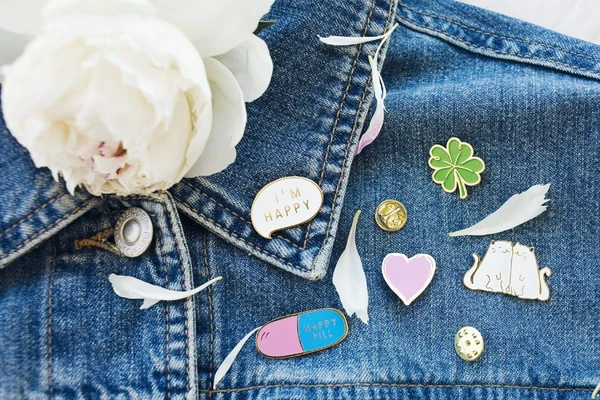
How to Style Custom Pins With Jackets and Everyday Outfits
Sometimes an outfit feels almost right but needs one detail to make it your own. A denim jacket, plain blazer, or favorite weekend layer already gives you a starting point. A carefully chosen pin can add a touch of color, introduce a personal symbol, or bring together accessories you already wear.
The appeal is in the small decisions. A single metallic design can look understated, while a little group of colorful pins can give a casual outfit a playful character. Neither approach requires replacing your wardrobe. What matters is choosing a design, placement, and combination that suit the clothes and the occasion.
Here is how to make pins feel like part of your outfit, with special attention to jackets, proportion, and protecting the pieces you love.
Start With the Mood of Your Jacket
Before choosing a pin, consider what the jacket already brings to the outfit. Is it relaxed and faded, sleek and structured, or covered in embroidery and contrasting panels?
A simple denim jacket offers room to experiment. A bright enamel design can stand out against dark denim, while a muted metallic pin can blend into a softer, worn-in look. Try one near the upper chest rather than immediately filling every available space.
A tailored blazer calls for a different approach. A small geometric design or a restrained symbol on the lapel can provide a focal point without competing with the jacket's shape. Wear it with a plain shirt when you want that detail to be noticeable.
A decorated varsity or statement jacket already has plenty happening visually. Choose a pin that picks up one existing color, or skip the jacket itself and place the accessory on a coordinating bag. You do not need to add detail everywhere for an outfit to feel personal.
Pick a Design You Actually Want to Wear
A pin becomes easier to style when it reflects something you like rather than something you feel obliged to display. That might be a flower, an initial, a simple illustration, or a symbol connected to a hobby or meaningful place.
If you are exploring custom pins, begin with the clothes you expect to wear them with. A design that looks appealing on a screen should also work at its actual size against a jacket, hat, or bag.
For everyday wear, think about a simple silhouette and a limited color palette. Small lettering and intricate artwork may be harder to appreciate from a normal viewing distance. A recognizable shape can do more for an outfit than a crowded design.
There is no need for every pin to carry a deep message. Choosing one because you enjoy its color or shape is just as valid. The goal is an accessory that feels comfortable in your wardrobe.
Use Color and Metal to Connect the Outfit
One straightforward styling trick is to repeat a detail already present elsewhere. A silver-tone pin can echo a belt buckle or necklace. A warm metallic finish can connect with earrings or a bag clasp. A colored pin can pick up a shade in your shirt or scarf.
For example, pair dark jeans and a cream top with a denim jacket, then add a pin containing a small touch of cream. The repeated color gives the outfit a connection without requiring every piece to match.
If you prefer stronger contrast, make the pin the accent. A vivid red design against a navy jacket can stand out when the rest of the outfit stays quiet.
Mixed metals are also an option. Rather than treating matching as a rule, look at the whole outfit. If the combination feels busy, simplify one accessory and see whether the balance improves.
Choose Placement Before Making a Hole
Placement changes the effect of the same pin. Near a lapel, it can feel polished. On the upper section of a denim jacket, it can read as a casual badge. On a canvas bag worn with the outfit, it adds personality without altering the jacket.
Hold the pin against a few possible positions and check the result in a mirror before attaching it. Try this while wearing the garment: a position that looks balanced on a hanger may fold or disappear once the jacket is on your body.
Avoid spots where the backing will press against you or rub against a shoulder strap. Check that the fastening is secure and that the pin does not pull the material out of shape.
Keep functional details in mind, too. A pin should not obstruct a zipper, make a pocket awkward to use, or catch on a scarf every time you move.
Be Careful With Leather and Delicate Materials
Pins use pointed posts or similar fasteners, so attaching one means puncturing the material. On leather, faux leather, and delicate fabrics, that can leave visible damage. Moving the pin repeatedly can create additional holes rather than simply changing the look.
If you want to preserve a leather jacket, wear the pin on another part of the outfit. A sturdy fabric bag, denim layer, or suitable hat can carry the detail while letting the jacket remain the main feature.
For example, a black leather jacket over a plain T-shirt can work with a small pin on a canvas crossbody bag. You still get the personal touch, and the accessory can be moved to another outfit later.
Even with fabric jackets, inspect the material and consider the weight of the pin. A heavy design may drag on lightweight cloth. When the garment is expensive or especially meaningful, it is sensible to keep puncturing accessories off it.
Build a Small Group With a Clear Connection
If you like wearing several pins, choose a connection between them. It could be color, subject, shape, or metal finish. A small collection of botanical designs feels different from a mix of travel symbols, but either can look considered when the arrangement has some consistency.
Lay the pins beside the jacket first and photograph a few combinations. Try one larger design with two smaller ones, leaving enough space to appreciate each shape. Then test how the arrangement looks when worn.
Avoid placing every pin in the same small area simply because it fits. Clustering can be effective, but crowding may hide the details you wanted to show.
Balance the rest of the outfit around the group. With several colorful pins, a plain top gives the eye somewhere to rest. With one subtle pin, you have more room for a patterned shirt or statement accessory.
Adjust the Look for the Occasion
For a casual coffee outing, try a denim jacket, relaxed trousers, sneakers, and one playful pin. For a dinner where the dress code allows personal accessories, a small pin on a fabric blazer can provide a quieter detail.
At a concert or fan gathering, a themed accessory can connect with the occasion without turning the whole outfit into a costume. Let one or two details carry the reference and keep the remaining pieces easy to wear.
Workplace expectations vary, so consider the setting before choosing a conspicuous design. The same pin that suits a creative office may feel out of place in a more formal meeting.
You can also rotate pins between outfits rather than buying a separate set for every jacket. A few designs you enjoy can offer several combinations when you change their placement and surrounding accessories.
Keep Pins and Clothing Ready for the Next Wear
Before cleaning a garment, remove the pins and follow its care label. Store pins with their backings attached so sharp posts are covered, and keep them separate from clothing that could snag.
A small compartment box makes it easier to see your collection and find the design you want. Check fastenings before wearing them, especially if an accessory has worked loose previously.
The most successful pin styling usually comes down to a few deliberate choices: a design you enjoy, a position that works on the body, and an outfit that gives the accessory enough space. Start with one pin, see how it feels, and build from there. A small personal detail can refresh familiar clothes without needing a completely new look.